On View
On viewObject number2014.79
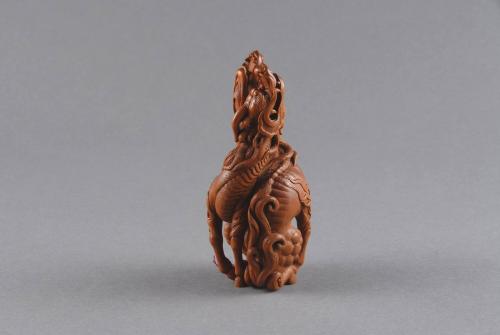
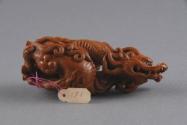
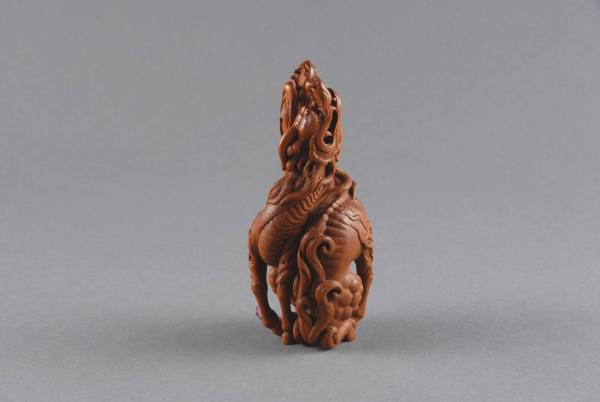
Kirin Okimono
Artist
Seihosai Meikei
Datemid to late 20th century CE
Mediumboxwood with inlay
DimensionsOverall: 3 3/4 × 1 1/4 × 1 1/4 in. (9.5 × 3.2 × 3.2 cm)
Credit LineGift of Mary Meader
Exhibition History"The Arts of China and Japan: Selections from the Collection," KIA Joy Light Gallery of Asian Art (Dec. 15, 2012 - June 9, 2013).
"Sugoi! 200 Years of Japanese Art," KIA, Galleries 2 & 5 (May 13, 2023 - September 24, 2023)Label TextThese two okimono (small decorative sculptures) depict mythical creatures from Japanese folklore. Kirins are not exclusive to Japanese culture and also appear prominently in Chinese and Korean cultures. The Kirin symbolizes peace, prosperity, and good fortune, and is believed to appear only during the reign of a wise, good-natured ruler or in times of great harmony. The Kirin is a chimera, a creature that combines the characteristics of various animals. It is often depicted with the body of a horse and the head of a dragon, sometimes adorned with antlers. Despite its fierce appearance, the Kirin is considered gentle and kind-hearted. Indeed, it is so compassionate that it avoids harming even a single blade of grass, floating gracefully above the ground.
The Baku is considered a sympathetic creature who was created from the leftover pieces of other animals. People who suffer from nightmares can call upon the Baku by saying, “Baku-san, come eat my dream” three times. The Baku then comes and protects the person. However, the legend carries a warning: if someone calls upon the Baku too often or asks it to eat more than a nightmare, it may devour the person's hopes and desires, leaving them empty and hopeless. [Label Text: Among the Beasts: Wild, Tamed and Imagined, Wednesday, October 28, 2026 - Sunday, January 31, 2027]