On View
On viewObject number2011.93
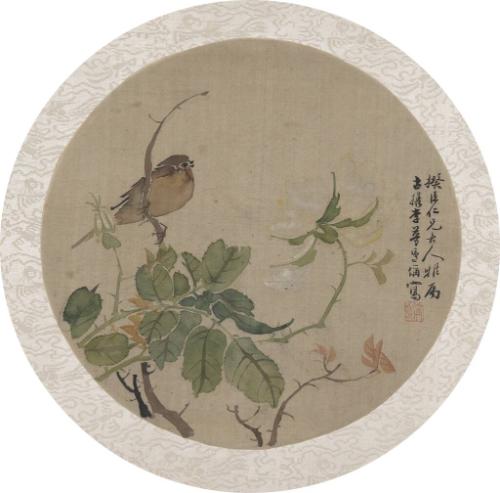
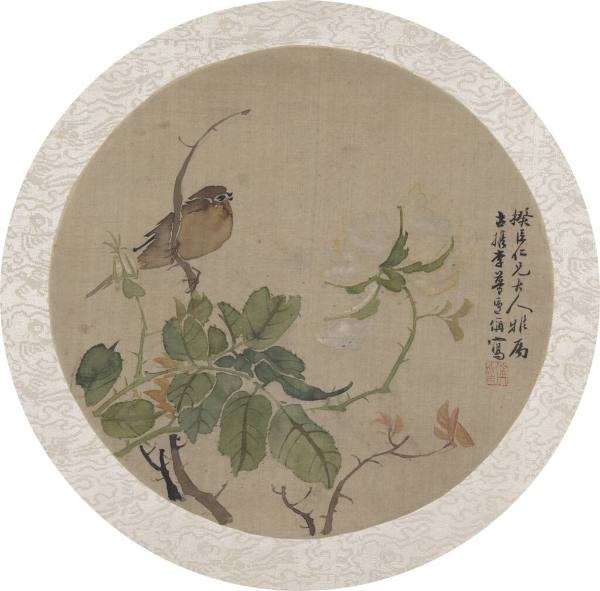
Bird and Flowering Rose
Artist
Zhu Cheng
(Chinese, 1826 - 1899/1900)
Daten.d.
Mediumink and color on silk
Dimensionsimage: 9 3/4 in. × 10 in. (24.8 × 25.4 cm)
mat: 20 × 16 in. (50.8 × 40.6 cm)
Credit LineGift of Albert and Betty Chang, retirees of Upjohn Company and Kalamazoo Valley Community College
Exhibition History"The Chinese Scholar's Brush: Works from the Albert and Betty Chang Collection," KIA Joy Light Gallery of Asian Art (May 7 - Aug. 27, 2011).
"Copley to Kentridge: What's New in the Collection?," KIA (Sept.14 - Dec. 1, 2013).
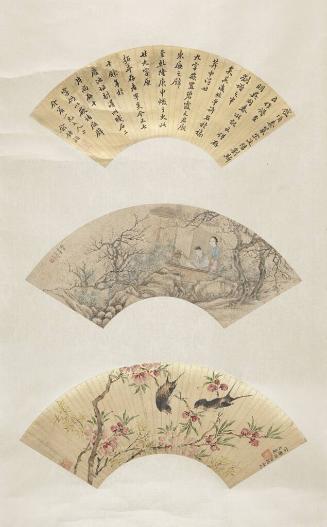
"Rhythmic Vitality: Six Princliples of Chinese Painting," KIA Joy Light Gallery of Asian Art (December 9, 2017 - March 25, 2018)Label TextBeyond their decorative appeal, “bird-and-flower” paintings like this one affirmed a connection to Chinese traditions during a period of political and cultural upheaval. Keen observation of nature was essential to mastery of bird-and-flower painting. The tiny brown bird bears the features of a warbler, known in parts of China for its sweet spring song. Thorny stems, a distinctive bud, and razor-edged mature foliage contrast with the reddish hue of tender, unfurling leaves, accurately depicting a rose. Though less commonly featured in Chinese art than the peony, the rose was also a traditional symbol of spring. A successful work was to be both decorative and symbolic. The artist reveals life's fleeting nature at the moment before a bird flits away and a fading petal falls. Yet, a new bud promises continued life and beauty. Bird-and-flower painting was already a 700-year-old painting tradition in the 19th century. Viewers understood these objects of beauty as expressions of Buddhist and Taoist philosophies that the divine exists everywhere, in the harmony of man and nature, in animals and plants. [Label Text: Among the Beasts: Wild, Tamed and Imagined, Wednesday, October 28, 2026 - Sunday, January 31, 2027]